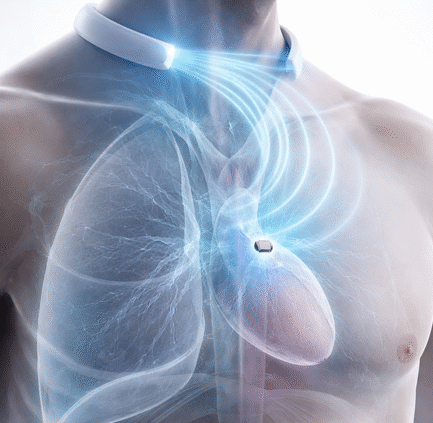


Portable ECMO is rapidly reshaping critical care delivery, and the surge in wearable-medical device patents shows how life-support technology is breaking free from the ICU. What was once a stationary, infrastructure-heavy therapy is evolving into a compact, intelligent, and transportable system that can accompany patients wherever care is needed.
For decades, extracorporeal membrane oxygenation provided last resort support for severe cardiac and respiratory failure, yet it required bulky consoles, wall power, compressed gases, and dedicated specialists. Now, advances in miniaturization, automation, battery systems, and smart sensing are transforming ECMO into a mobile platform.
This transformation is not merely an incremental hardware improvement. It represents a complete architectural rethink of life support, and it is driving a fundamental shift in how medical device patents are drafted, protected, and commercialized. Companies are no longer patenting individual pumps or membranes. They are protecting integrated ecosystems, portable housings, and intelligent control systems built specifically for Portable ECMO deployment.
Portable ECMO: Why Mobility Is Redefining Critical Care
Traditional ECMO therapy locks patients into intensive care beds. Transport between hospitals or departments is risky and logistically complex. Every move requires equipment disconnection, reconfiguration, and specialist oversight.
Modern Portable ECMO eliminates this bottleneck. Compact systems allow continuous life support during transfer, imaging, surgery, and step-down care. Instead of adapting the hospital around the machine, the machine adapts to the patient.
Clinically, this means:
- Safer inter-hospital transfers
- Faster emergency deployment
- Improved survival windows
- Lower staffing burden
These benefits explain why health systems increasingly evaluate wearable-medical engineering strategies to extend mobility even further. As portability increases, the technology begins to resemble advanced wearable-medical platforms rather than conventional ICU hardware.
Engineering Foundations of Portable ECMO Systems
Designing Portable ECMO is uniquely difficult because the system handles real-time blood flow. Unlike monitors or infusion pumps, every mechanical change directly affects hemolysis, clotting risk, and gas exchange.
Miniaturized Blood Pumps
The pump must circulate multiple liters of blood per minute while minimizing shear forces. Smaller designs naturally increase turbulence, which ruptures red blood cells leading to hemolysis.
Innovations include:
- Magnetically levitated impellers
- Frictionless bearing designs
- Low-shear flow geometries
- Integrated motor-pump cartridges
Modern wearable medical device patents increasingly protect these full architectures rather than isolated components, because integration improves reliability and simplifies transport.
Advanced Oxygenators and Oxygenation of Membranes Efficiency
The oxygenator where oxygenation of membranes occurs historically accounts for most of the system’s size. Portable designs require high efficiency within a compact volume.
Engineers now deploy:
- High-surface-area hollow fibers
- Stacked membrane modules
- Spiral or radial flow paths
- Low-resistance channels
These compact exchangers maintain effective oxygenation of membranes while shrinking overall dimensions. Many new patents combine pumps and oxygenators into sealed disposable cartridges to improve sterility and setup speed.
Battery Power and Energy Optimization
Hospital ECMO relies on fixed electrical supply. Mobility requires independence.
Portable designs integrate:
- High-density lithium battery packs
- Redundant power rails
- Hot-swap modules
- Energy-efficient brushless motors
This convergence of mechanics and electronics has expanded the scope of wearable-medical device patents into electro-mechanical and software-driven claims.
Embedded Monitoring and Smart Automation in Portable ECMO
How Portable ECMO Uses Intelligent Control Systems
Continuous manual supervision is impractical outside the ICU. Automation becomes essential.
Modern systems include:
- Pressure monitoring
- Flow sensing
- Bubble detection
- Oxygenation tracking
- Alarm prioritization
- Closed-loop regulation
These functions convert the platform into a semi-autonomous life-support device. Patents increasingly protect sensor placement and algorithmic logic together, a hallmark of next-generation wearable-medical design philosophy.
Wearable ECMO and Wearable Medical Device Patents: The Next Frontier
True body-mounted ECMO introduces entirely new engineering constraints. Devices must operate safely while attached to moving patients.
They must be:
- Lightweight
- Shock-resistant
- Balanced ergonomically
- Secure at cannulation points
- Comfortable for long durations
This has given rise to fresh classes of wearable-medical device patents covering harnesses, support frames, isolation mounts, and flexible housings.
Here, the system begins to resemble advanced wearable-medical technology rather than stationary equipment. Researchers are even exploring prolonged extracorporeal support concepts approaching permanent artificial lungs, potentially bridging patients for weeks or months.
Market Leaders and Emerging Portable ECMO Platforms
Getinge Cardiohelp
Widely recognized as a benchmark Portable ECMO console, Cardiohelp supports intra- and inter-hospital transport and is often described clinically as an ECMO-to-go solution due to its compact footprint and battery capability.
Hemovent and MicroPort
Hemovent’s mobybox ecmo platform emphasizes extreme portability. Following acquisition activity, microport ecmo systems gained broader international reach, increasing competition in compact extracorporeal support.
Startups and Next-Gen Designs
New entrants are developing:
- Disposable cartridges
- Automation-first architectures
- Cloud connectivity
- mini ECMO concepts
Their IP strategies rely heavily on early wearable-medical device patents to secure competitive moats.
For analysts, compiling a wearable medical device patents list has become a standard step when evaluating this fast-moving sector.
Safety, Hemocompatibility, and Blood Compatibility
Exposure to artificial surfaces triggers clotting and inflammation. As systems become portable, maintenance opportunities shrink, so inherent safety must improve.
Innovations focus on:
- Antithrombotic coatings
- Shortened tubing paths
- Reduced priming volumes
- Smooth flow surfaces
- Stagnation elimination
Many of these features are protected under system-level wearable-medical device patents, highlighting safety as a core differentiator.
Cost, Access, and Patient Considerations
Hospitals frequently ask about portable ECMO machine cost. While acquisition prices remain significant, mobility can lower total cost of care by reducing ICU days and transport complexity.
Patients often compare ECMO to transplant options, including artificial lung transplant cost, even though ECMO is temporary support rather than replacement therapy. The distinction is important when counseling families.
In many settings, ECMO remains the most practical advanced artificial lung machine for acute rescue.
Global Patent and Innovation Trends
Patent activity spans the United States, Europe, Japan, South Korea, and China. Chinese manufacturers have accelerated development of domestic extracoporeal membrane and extracorporeal membrane oxygenation platforms, reflecting regional self-reliance and rising local IP filings.
Multi-jurisdiction filings show that portable life support is not niche; it is a worldwide priority.
Freedom-to-Operate and Strategic IP Planning
Integration complicates freedom-to-operate. A single product may intersect with:
- Pump patents
- Oxygenator patents
- Battery systems
- Sensor electronics
- Control software
Because everything is packed into one device, cross-domain conflicts are more likely. This is why proactive landscaping and strategic wearable medical device patents are critical before commercialization.
The Future of Portable ECMO Medical Systems
The trajectory is clear:
- Smaller systems
- Smarter automation
- Longer runtime
- Remote telemetry
- Greater patient mobility
Eventually, Portable ECMO may enable ambulation or home-bridge therapy. While still experimental, research into long-duration extracorporeal support hints at devices that could function as semi-continuous respiratory assistance.
As these advances converge, ECMO platforms increasingly resemble intelligent wearable medical ecosystems rather than hospital consoles.
Conclusion
Portable ECMO is transforming extracorporeal life support from a stationary ICU intervention into a mobile, intelligent, and patient-centered platform. Engineering advances in pumps, oxygenation of membranes, sensors, and power systems are enabling safer transport and expanding care settings.
At the same time, the rapid growth of wearable medical device patents demonstrates that competitive advantage now lies in integrated system design, automation, and mobility. Companies that protect complete architectures, not just components, will shape the future of extracorporeal therapy.
Life support is no longer tied to the bedside. With Portable ECMO, it travels with the patient, and the patent landscape is evolving just as quickly.